Jobs for women in recovery
Life-giving work in a safe environment, where women from Trinity Rescue Mission's residential program step into stability, mentorship, and the slow rhythms of land — rhythms that mirror the rhythms of rebuilding a life.
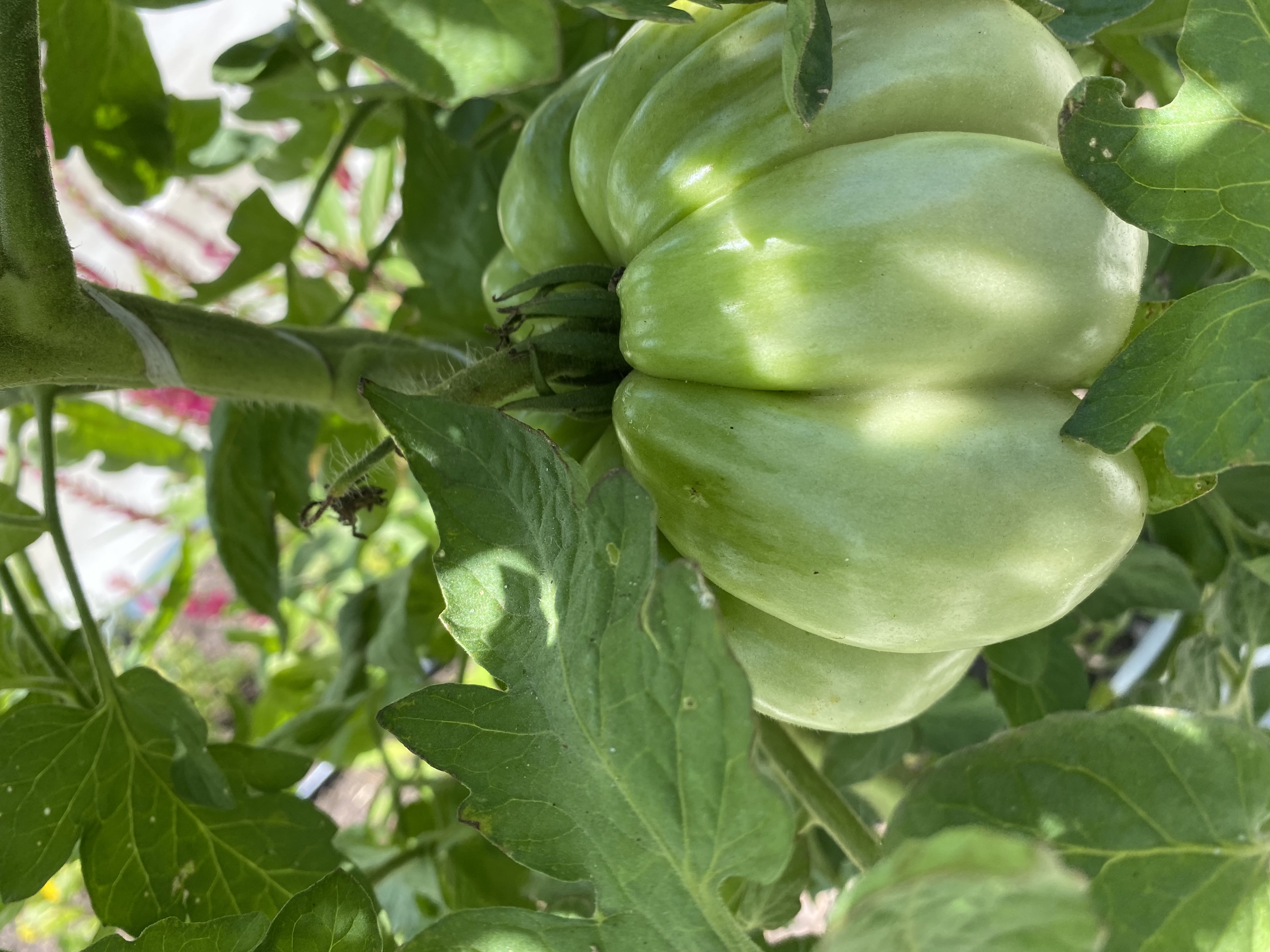
A pilot underway in Folkston, Georgia — growing food for the homeless of Jacksonville, and growing women into the lives they were made for.
From one acre, three women, and a kitchen 50 miles away. The number isn't the point — the people are. But the number tells you we're keeping our word.
The long-term vision is structured around three pillars — each a reason on its own, each impossible without the others.
Life-giving work in a safe environment, where women from Trinity Rescue Mission's residential program step into stability, mentorship, and the slow rhythms of land — rhythms that mirror the rhythms of rebuilding a life.
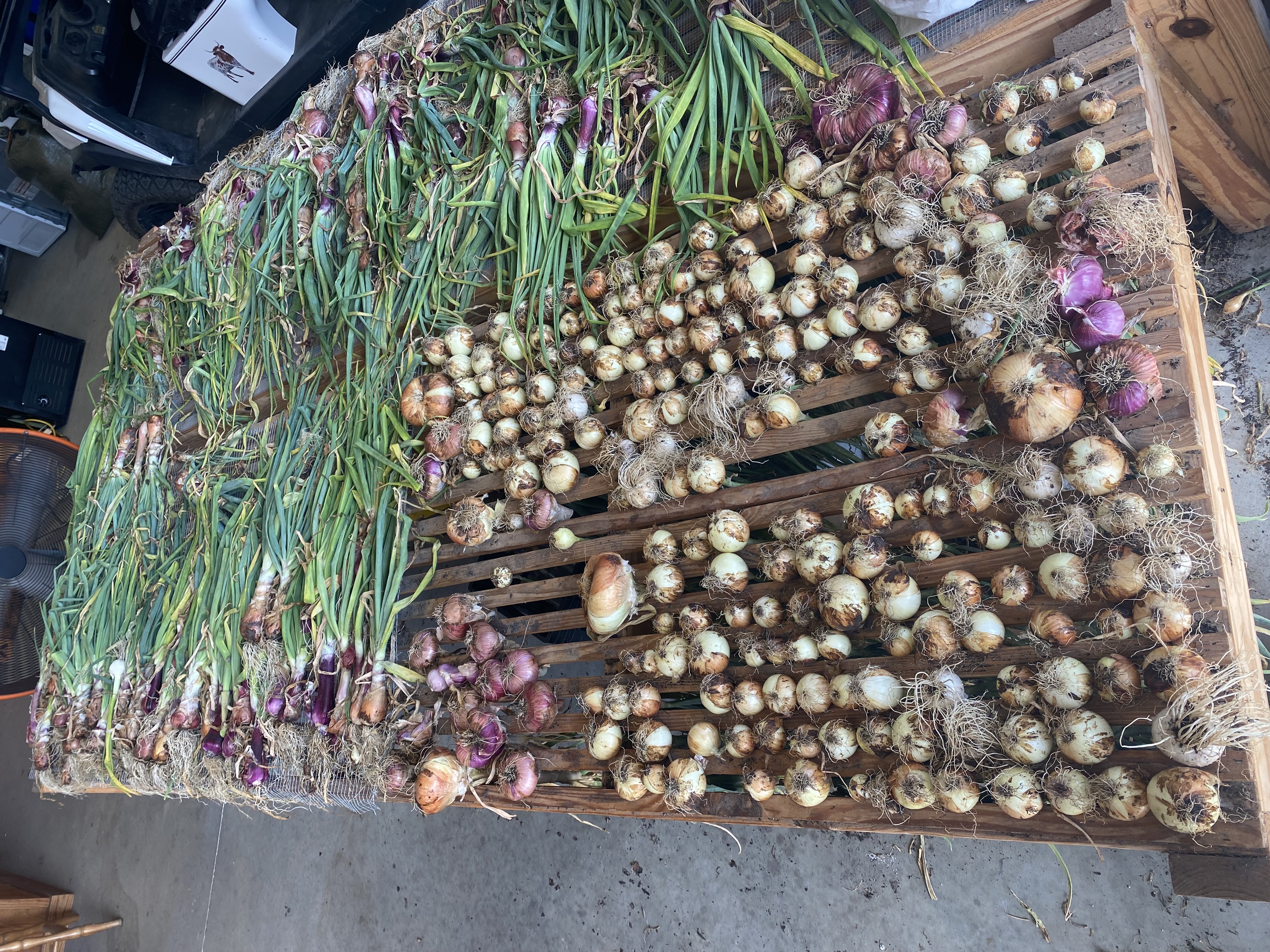
Real nutrition starts with real food. The pilot delivers regenerative, nutrient-dense produce straight from the field to the tables of Jacksonville's homeless — the people who need whole food the most and see it the least.
Investing in the next generation with farm-based education that goes beyond the classroom. Children learn the principles of long-term, sustainable growth — for the land, and for themselves.
Regenerative farming requires patience, consistency, and showing up every day. So does recovery. The premise of the partnership
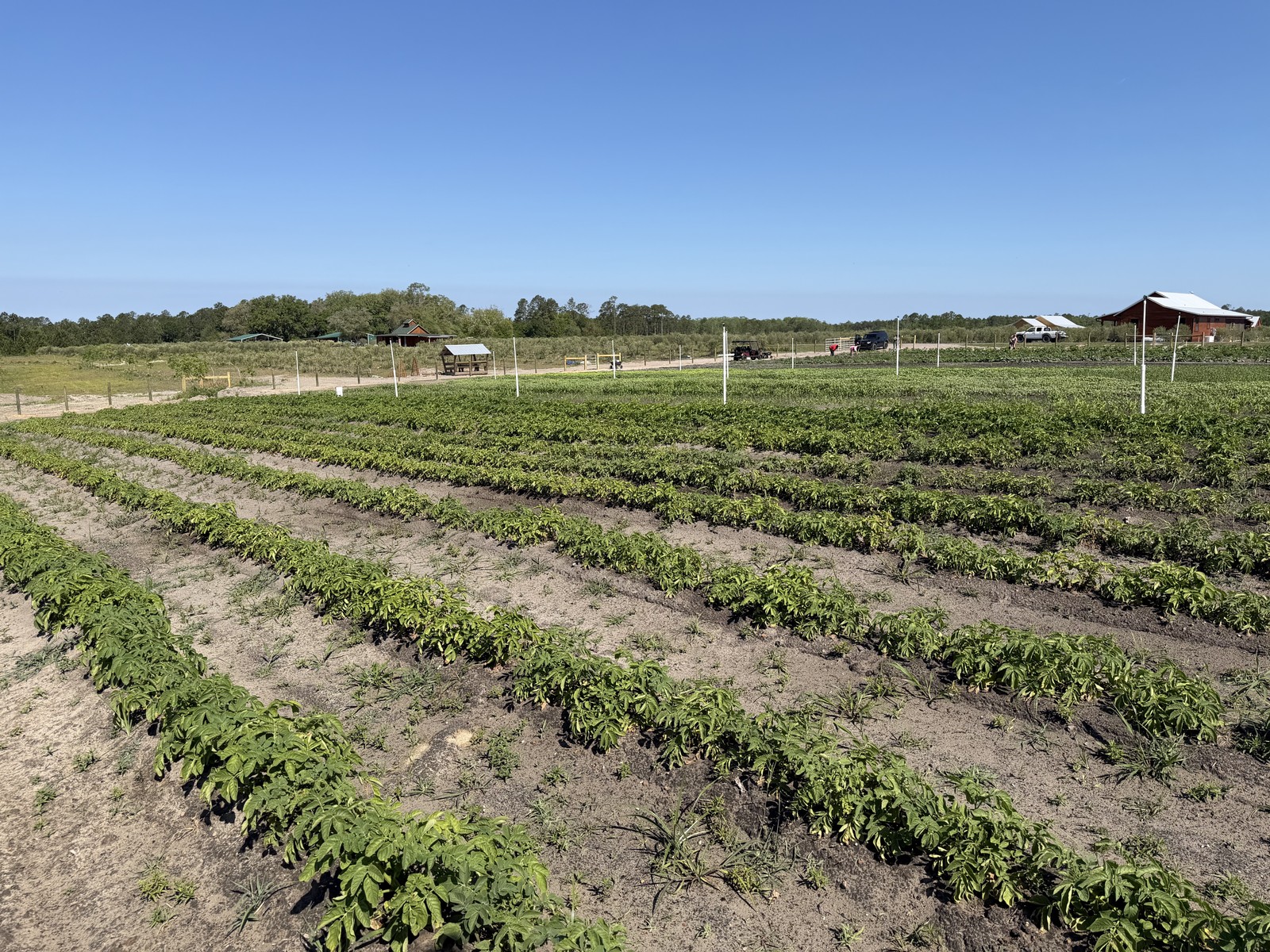
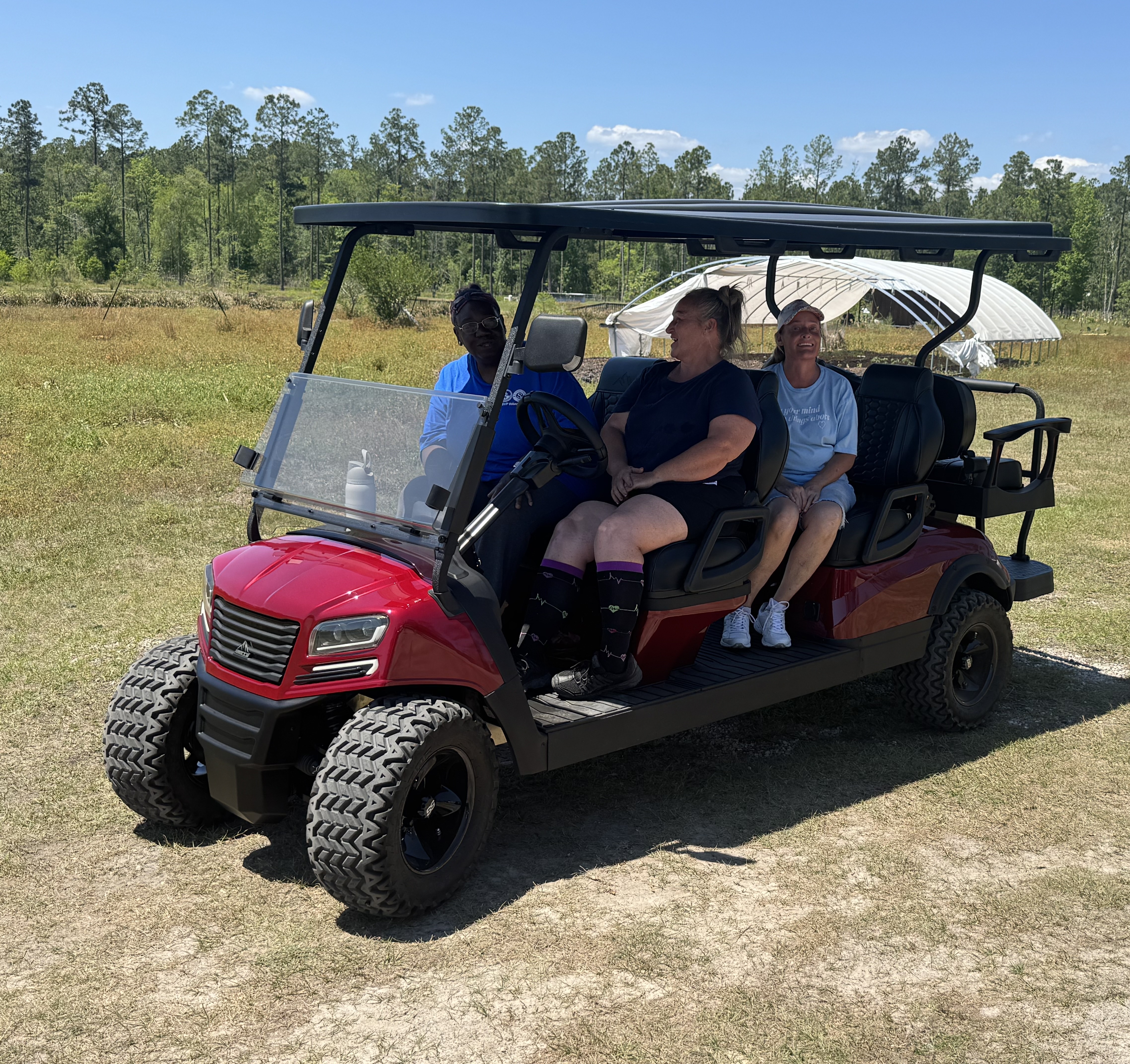
Soil prepped. Irrigation laid. Heirloom seed in the rows. Three women from Trinity Rescue Mission's residential program working the garden several days a week. A 100-acre master plan in motion.
This is not a garden project. It's a working pilot — designed to validate yields, costs, and process before we scale.
We're not asking for a transaction. We're inviting a conversation — about partnership, about giving, about how this kind of work can scale without losing what makes it work.
info@trinityrescue.org →